
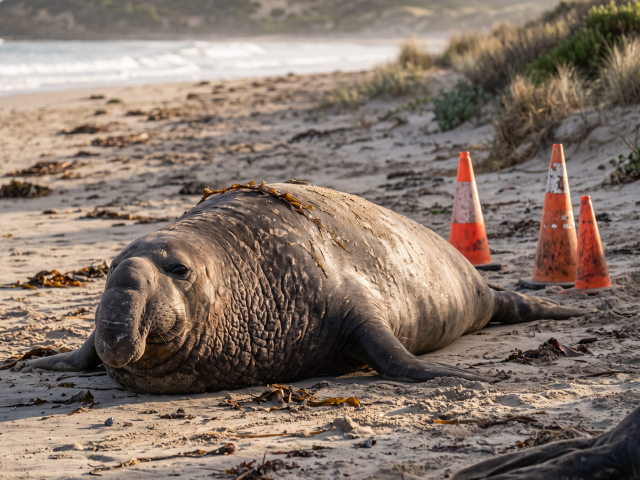
A 1,000-kilogram southern elephant seal known as "Neil the Seal" has created a unprecedented management challenge for Australian wildlife authorities after his viral social media popularity led to severe safety risks and municipal property destruction. Born in October 2020 in Salem Bay, Tasmania, the six-year-old juvenile male has become an international internet phenomenon, amassing over 1.4 million followers on dedicated TikTok and Instagram accounts. However, his repeated visits to residential towns in South East Tasmania—including a 15-day haul-out stretch in Clarence City in July 2026—have resulted in tens of thousands of dollars in infrastructure damage and forced government officials to issue formal public safety warnings. According to statements issued by Tasmania's Department of Natural Resources and Environment (NRE Tas) and the eSafety Commissioner, the growing crowds of tourists and local onlookers attempting to approach the 2,200-pound marine mammal have created high-risk encounters for both the public and the animal. Officials warned that unmanaged human behavior could ultimately force authorities to consider euthanasia as an extreme last resort if public safety cannot be guaranteed. Municipal Damage, Infrastructure Costs, and Behavioral Instincts: The escalation of Neil's suburban visits has created significant financial and operational burdens for local councils and state departments. During a single 15-day haul-out period in Clarence City, the elephant seal caused approximately 31,000 Australian dollars ($23,308 USD) in municipal property damage. According to Australian Associated Press reporting and local council tallies published on July 30, 2026, Neil crushed street signs, knocked over ten traffic bollards, flattened residential fences, and repeatedly blocked roadway traffic by resting directly in front of vehicles and building entrances. Wildlife biologists from NRE Tas explain that Neil's disruptive behavior stems from natural developmental instincts rather than aggression. Male southern elephant seals use physical sparring and mock fights to establish social dominance and prepare for future mating competition. Because Neil rests in isolation along suburban beaches rather than joining established sub-Antarctic breeding colonies, he directs these developmental behaviors toward available suburban structures. • Estimated Weight and Size: Approximately 1,000 kg (2,205 lbs) and 3 meters in length as a juvenile, with adult males capable of reaching 5 meters and 4,000 kg. • Infrastructure Damage Bill: AU$31,000 ($23,308 USD) in Clarence City during July 2026 alone, including destroyed bollards, flattened fences, and bent street signage. • Management and Staffing Costs: NRE Tas allocated approximately AU$45,000 ($33,835 USD) between 2025 and 2026 for dedicated wildlife officer monitoring, traffic control, and public safety management. • Statutory Enforcement Penalties: Fines up to AU$16,000 and maximum prison sentences of 12 months under Tasmanian wildlife protection laws for individuals touching, harassing, or feeding the seal. Regulatory Warnings and the "Loved to Death" Dilemma: The intersection of viral social media fame and wildlife protection has drawn criticism from conservation experts. Tasmanian Department of Natural Resources and Environment marine biologist Kris Carlyon publicly warned that Neil faces the risk of being "loved to death" due to irresponsible human interaction. The viral videos—including clips of Neil crushing plastic bollards and resting on residential lawns that have gathered over 17 million views—have drawn international crowds to quiet Tasmanian coastal suburbs. According to statements from NRE Tas and Tasmanian Premier Jeremy Rockliff, wildlife management teams are forced to deploy physical barricades, high-visibility traffic cones, and dedicated personnel whenever Neil hauls out on land to maintain a mandatory 20-meter distance buffer. Authorities emphasized that under Australian federal and state marine mammal protection legislation, interfering with native wildlife carries strict financial penalties and potential imprisonment. 1. Mandatory Distance Boundaries: Wildlife regulations require spectators to stay at least 20 meters away from resting elephant seals and at least 50 meters away if walking a dog. 2. Prohibited Interventions: Feeding, touching, spraying water on, or blocking a marine mammal's clear path back to sea is strictly illegal under Australian law. 3. Euthanasia as an Extreme Last Resort: Authorities referenced historical international incidents—such as Freya the walrus in Norway in 2022—where persistent crowd mismanagement led officials to destroy a habituated marine animal to protect public safety. Context and Historical Antecedents in Marine Conservation: The situation surrounding Neil highlights the broader challenge of managing wild pinnipeds that establish haul-out sites in urbanized coastal environments. Historically, southern elephant seals (Mirounga leonina) were hunted to near extinction in the Southern Ocean during the 19th century before international conservation treaties enabled population recoveries. While the majority of the species breeds on remote sub-Antarctic islands such as Macquarie Island and Heard Island, occasional births occur on the Tasmanian mainland. Unlike adult bull seals that remain within established colonies to fight for territory, young males often spend extended periods resting on beaches during their annual moulting cycles. Neil's case is unusual because his repeated return to suburban Hobart streets has habituated him to human infrastructure, creating a chronic cohabitation conflict that will become increasingly dangerous as he reaches full maturity at age 12, when he could weigh up to four metric tons. Strategic Implications and Wildlife Policy Limits: The management of habituated marine mammals presents complex logistical, legal, and ethical boundaries for Australian policymakers: • Resource Allocation vs. Conservation Priorities: Deploying round-the-clock wildlife officers to manage crowd control for a single seal diverts state environmental funding away from broader ecosystem management programs. • Social Media Accountability: Conservation groups argue that algorithmic amplification of urban wildlife encounters encourages unsafe public behavior, prompting calls for social media platforms to attach automated safety disclaimers to viral animal content. • Long-Term Relocation Feasibility: Wildlife experts note that physically relocating a 1,000-kilogram wild animal to remote sub-Antarctic islands carries severe health risks for the seal and offers no guarantee that he will not navigate back to his natal Tasmanian beaches. What We Know and What Remains to Be Discovered? - What is confirmed: • Neil the Seal is a wild, 1,000-kilogram juvenile male southern elephant seal born in Tasmania in October 2020. • Official records from local Tasmanian councils confirm that Neil caused approximately AU$31,000 in property damage in Clarence City during July 2026. • NRE Tas confirmed spending approximately AU$45,000 between 2025 and 2026 to manage public safety around Neil's suburban visits. • Wildlife authorities have warned that legal penalties of up to AU$16,000 apply to anyone harassing or touching the animal. - What remains to be determined: • Whether Neil will permanently migrate south toward sub-Antarctic breeding colonies as he approaches full physical maturity over the next six years. • Whether Tasmanian state authorities will establish permanent exclusion zones or modified infrastructure along suburban beaches to prevent future vehicle and property damage. • Whether public compliance with distance restrictions will remain high enough to prevent safety incidents that could force relocation or euthanasia decisions.
Neil the Seal's viral antics in Tasmania trigger municipal damage, public safety concerns, and official warnings from wildlife authorities against "loving him to death."
Resumen y aportes del autor:
Author's notes: Tasmania's viral elephant seal is causing a major stir across the globe! Named "Neil the Seal," this famous marine mammal has amassed millions of fans worldwide thanks to his hilarious viral videos and quirky suburban visits. However, his playful roaming is creating serious real-world problems for local residents and wildlife officials alike. In my view, while Neil’s online antics are undeniably entertaining, we cannot lose sight of the fact that he is a massive, wild predator. Weighing over 1,000 pounds, his frequent strolls through residential neighborhoods have already caused over AU$31,000 in property damage. Australian authorities are entirely justified in issuing urgent safety warnings, as crowds of eager onlookers constantly risk dangerous interactions just to capture social media content. Ultimately, this situation highlights the complex balance between online virality and wildlife conservation. Respecting wild animals means keeping a safe distance, no matter how charming they appear on camera. Enjoying Neil’s fame from behind a screen is great, but protecting both the community and the seal himself must remain the top priority.